|
The Concentration Followed You Overseas
At 12:38 p.m. in Seoul on Thursday, the Korea Exchange stopped trading for 20 minutes. The Kospi, Korea’s main index, had fallen 8% from Wednesday’s close, enough to set off an automatic pause, and it went on to finish down 7.6% at 5,554.22. SK Hynix, which makes the memory chips that work alongside Nvidia’s processors in AI computers, lost 11.1%. Samsung lost 9.5%. In Tokyo, Japan’s Nikkei 225 index gave up 4.9%.
The same afternoon in Taiwan, TSMC, which manufactures Nvidia’s chips, reported a sixth straight quarter of record profit: about $23.6 billion, up 69% from a year earlier, on $46.72 billion of sales. It told investors the next three months would bring $52.3 billion to $54.3 billion. Demand for AI chips held up fine on Thursday. What fell was the price investors are willing to pay for chip stocks. The day before, U.S. inflation came in hotter than expected and the interest rate on 10-year Treasury bonds briefly topped 5.32%. CoreWeave, a company that rents out AI computing power and carries nearly $50 billion of debt, lost 15% the same day. TSMC still plans to spend $60 billion to $64 billion this year. That money ends up in data centers that need enormous amounts of electricity, which is why some of the loudest sales pitches have moved from AI chips to power.
|
Trump Goes “All-In” on Grand Canyon Energy Breakthrough
On July 4th, Washington killed the tax credits for solar, wind and EVs.
One energy source got the opposite.
Eight years of credits. Right alongside oil and nuclear.
It’s the well a crew hit near the Grand Canyon. Almost 8X the output of Saudi Arabia’s biggest oil well.
Google’s in. Gates is in.
On October 20th, the feds auction 83 new parcels for it.
One company owns the entire chain. Get in before the gavel drops.
|
Why this reaches your 401(k). The emerging-markets fund is the slice many 401(k) plans and advisors add so your money is not riding on the same handful of U.S. tech names. On Oct. 6 we noted that Nvidia and Apple make up 15.61% of the S&P 500. In the MSCI Emerging Markets Index, TSMC alone made up 15.63% at the end of September. Add Samsung and SK Hynix, and three companies came to 30.02% of an index that holds 1,165. Taiwan and South Korea together were 50.34%. Put another way: of every $80,000 in a fund that copies the index, roughly $24,000 sat in those three chipmakers and about $12,500 in TSMC alone.
The rally hid it. Through Sept. 30, the MSCI emerging-markets index gained 23.38% this year, against 13.03% for MSCI’s index of stocks worldwide. That looked like spreading your money out was paying off. Much of the gain came from the same AI hardware boom, just bought in a different currency. Korea’s Kospi roughly doubled in the first half of the year, according to the Korean business paper Aju Business Daily, and has now lost more than 20% in seven trading days.
Watch who is selling. The money moved before the headlines did. Foreign investors sold about $2.7 billion more Korean stock than they bought on Thursday, the seventh trading day in a row. Korean individuals bought nearly $1 billion, and Korean funds and other institutions about $1.3 billion. Korean investors also owed their brokers about $25 billion in loans taken out to buy stock. On Tuesday, brokers forced the most sales since July 31 on customers who had bought shares they could not pay for. Big global money managers are selling while local investors buy the drop, partly with borrowed money. In my years advising investors, that mix usually meant the low point took longer to arrive. Weeks like this are also when the gold sellers make their loudest case, and one of them makes it below.
|
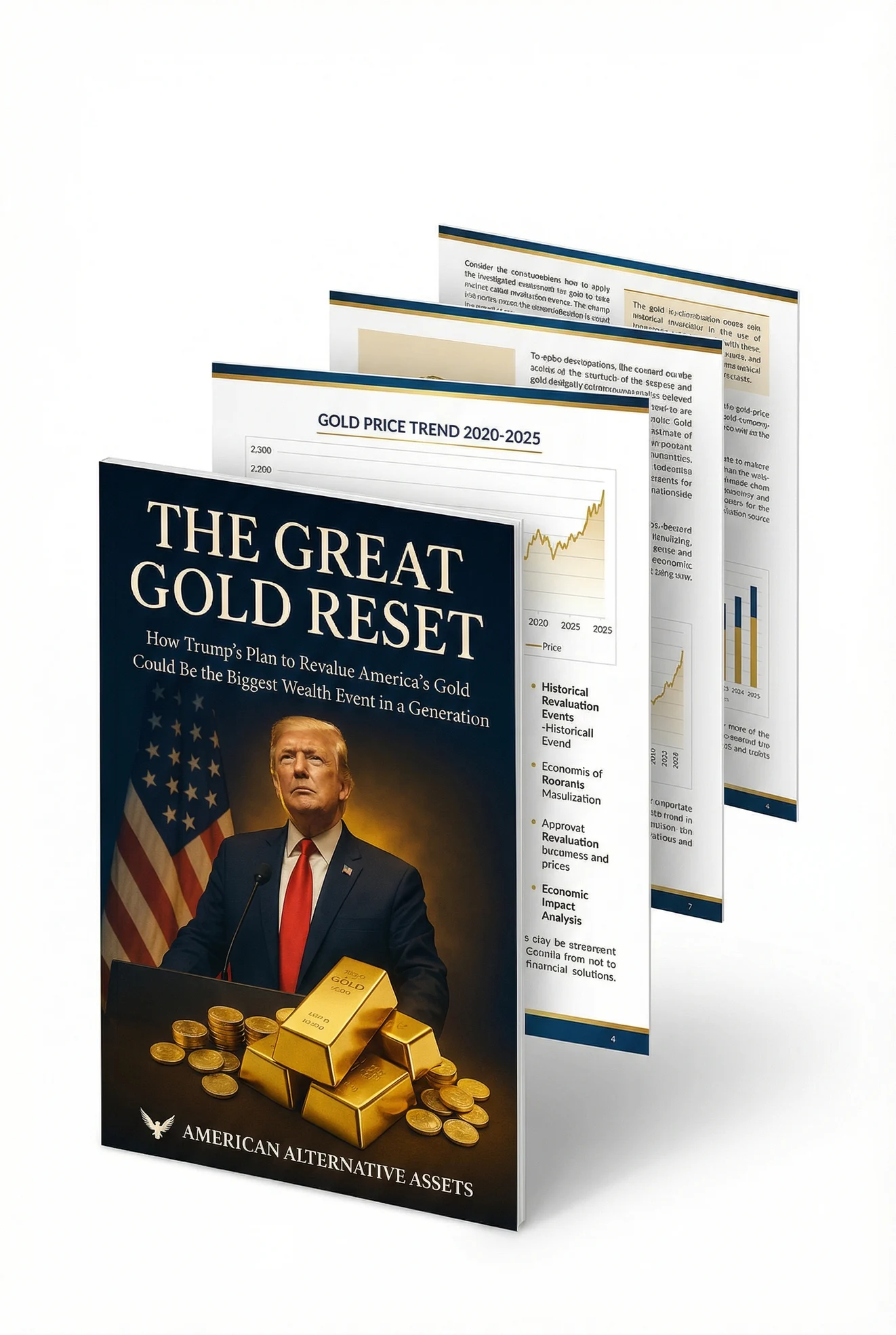
Editor’s Note: What you’re about to read involves a specific provision of federal law that most financial advisors have never mentioned to their clients.
From the desk of Shanon Davis, CEO — American Alternative Assets
If you hold retirement savings in dollar-denominated accounts, what I’m about to show you could be the most important thing you read this year.
Most people don’t know that U.S. Code Title 31, Section 5117 gives the President legal authority to revalue America’s gold reserves by executive order alone. No congressional vote. No public debate. One signature.
FDR used this exact authority in 1934 — resetting gold from $20.67 to $35 overnight. No warning. Billions in wealth transferred before most Americans knew what happened. The investors already in gold protected everything. Everyone else watched.
Here’s what’s sitting on the books right now: the U.S. holds 8,133 metric tons of gold valued at $42.22 per ounce — a price set in 1973. At today’s market price, that’s a $1.59 trillion gap between the government’s ledger and reality.
Think about that. Every retirement account in America is priced against a dollar that pretends gold is worth $42. When that fiction breaks, the adjustment won’t be gradual.
Trump has publicly questioned why America doesn’t “use” its gold. No executive order has been signed. But the legal authority is in place — and the conditions justifying it are mounting.
Here’s what it means for your retirement:
- Your IRA: Accounts already holding physical gold would sit on the right side of the largest government accounting correction in history
- Your 401(k): Most target-date funds hold zero hard assets — they’d miss this entirely, just like 1934
- The tax-free move: Reposition part of your retirement into physical gold now — no penalties, no taxable event
- The window: FDR gave zero warning — investors who weren’t positioned missed the entire move
It’s called The Great Gold Reset — the kind of intelligence financial newsletters charge $97 to $297 for. Right now it’s yours free. P.S. If Title 31 is activated, the repositioning window closes before the announcement.
© American Alternative Assets. All rights reserved.
This is an advertisement.
|
Where that leaves you. TSMC’s forecast says the AI building boom still has room to run. Thursday says something narrower: an overseas fund can carry the same bet you thought you were balancing. Every fund publishes a fact sheet, a one-page summary that lists its top ten holdings, and that list tells you more than the fund’s name. Fund companies also follow different index makers: MSCI counts Korea as an emerging market and FTSE counts it as a developed one, so these chipmakers can show up in either kind of international fund. Gold dealers offer one answer to that. My steadier read is simpler: know how much of your money rises and falls with one industry, and decide on purpose whether that share suits you.
The next test comes at 8:30 a.m. Eastern today, when the government reports September retail sales (forecast: up 0.3%) and producer prices, the wholesale prices businesses charge each other (forecast: up 0.5%). Bond interest rates eased overnight. If both numbers come in high, rates could climb again before the Fed meets Oct. 27–28, and Seoul just showed how fast the market’s most popular bet can fall when the mood turns.
Plenty of Americans went overseas to get away from the AI trade. It was already there, holding 30% of the seats.
Harold Winston
Advised individual investors for thirty years. Now reads markets for a living.
Stay grounded while markets move fast.
|